Front‑End Loading (FEL) in Capital Projects - Energy‑sector Continuous Process Industries:

The Importance of Front-End Loading (FEL) in Capital Projects
Executive Summary
Front-End Loading (FEL), also known as Front-End Planning (FEP) or Front-End Engineering Design (FEED), is a structured, stage-gated approach to defining a capital project before significant funds are committed. In continuous process industries such as refining, petrochemicals, and LNG, a high-quality FEL is consistently associated with improved safety, cost efficiency, schedule adherence, and operability outcomes. Independent Project Analysis (IPA) identifies FEL completeness as the most reliable predictor of capital project performance. This leads to lower contingency needs, fewer late changes, faster execution, and more reliable startups.
The Construction Industry Institute (CII) reports substantial cost savings and schedule reductions when robust front-end planning is employed. However, global megaprojects continue to struggle with performance issues. McKinsey’s analyses of billion-dollar projects reveal average cost overruns nearing 80% and significant delays, highlighting the critical importance of disciplined FEL. This white paper elucidates what constitutes strong FEL, why it is particularly vital in continuous process plants, and how to implement it effectively with measurable gate checks. Additionally, we outline several qualitative and quantitative tools that the industry uses to assess scope definition and maturity, aligning it with an estimate-class system. Finally, we provide a practical 12-step implementation roadmap.
Introduction
In capital-intensive, continuous process industries, decisions made during the initial 10–20% of the project lifecycle often lock in the majority of eventual costs, schedules, and operability outcomes. FEL provides the necessary discipline to explore options broadly, then converge thoughtfully, creating an execution-ready scope, cost, schedule, and risk basis before committing full funds.
IPA’s database indicates that FEL completeness is the most significant predictor of project outcomes. Meanwhile, CII demonstrates quantifiable payback from robust front-end planning. Despite this, global megaprojects (those exceeding $1 billion) frequently underperform. McKinsey reports that these projects often experience average cost overruns of approximately 80%. In light of the persistent underperformance of megaprojects, FEL emerges as the most controllable lever that owners can utilize to safeguard value.
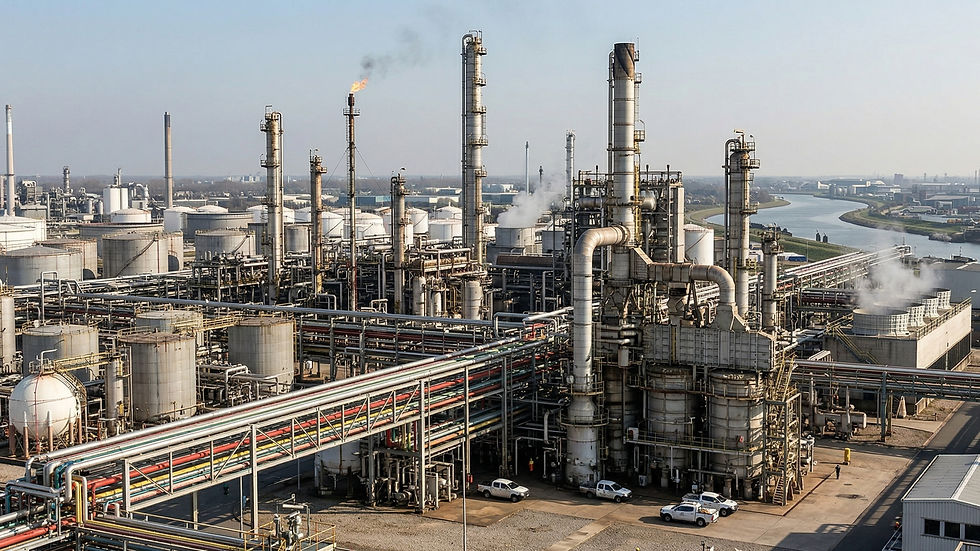
The Business Case for FEL in Continuous Process Industries
CII’s longitudinal benchmarking, which encompasses over 1,000 projects, links high-quality front-end planning to significant cost savings and schedule reductions, ranging from 5% to 25%.
Independent Project Analysis (IPA) identifies FEL completeness as the most reliable predictor of capital project performance. This leads to lower contingency needs, fewer late changes, faster execution, and more reliable startups. Conversely, McKinsey’s analyses of billion-dollar megaprojects highlight average cost overruns nearing 80% and substantial delays, underscoring the value of disciplined FEL.
Quantifiable Payback
Robust front-end planning can yield cost savings and schedule reductions between 5% and 25%.
Risk Reduction
A strong FEL process reduces contingency requirements and enhances early operational performance.
Complexity Management
In integrated units, such as hydrotreaters or carbon capture trains, minor definition gaps can cascade into significant redesigns and quality incidents.
Value Protection
FEL serves as the most controllable lever for owners to protect value against chronic megaproject underperformance.
Why Do Continuous Process Plants Experience FEL Lapses Most Severely?
Integrated units, including hydrotreaters, reformers, and crackers, amplify small definition gaps into cascading redesigns, quality incidents, and extended ramp-ups. A well-executed FEL consolidates the heat and material balance, process flow diagrams (PFDs), piping and instrumentation diagrams (P&IDs), operability and maintenance needs, constructability, and commissioning logic before field mobilization. This timing is crucial, as changes are least expensive and most impactful at this stage.

Quantifying Quality: Industry Metrics
To ensure objective decision-making at gates, organizations utilize several quantitative tools:
Project Definition Rating Index (PDRI)
CII’s scoring method measures scope completeness across engineering deliverables, site factors, execution planning, and risks. It is employed multiple times during FEL to identify and close gaps before authorization. Lower scores indicate better definition; organizations should establish internal thresholds based on project type and size.
FEED Maturity and Accuracy Total Rating System (MATRS)
CII’s FEED MATRS correlates FEED maturity and estimate accuracy with downstream change orders and cost performance, thereby supporting gate decisions.
IPA FEL Index
This benchmark-based measure of FEL completeness is used to predict outcomes and provide targeted recommendations for closing definition gaps.
AACE 18R-97
This process-industry cost estimate classification standard (Class-5 to Class-1) is tied to definition maturity rather than estimator effort, ensuring that expectations for accuracy remain realistic.
12-Step Implementation Roadmap
Codify a stage-gated model (FEL-1/2/3) with explicit deliverables and decision criteria linked to investment committees.
Train teams on PDRI and FEED MATRS, requiring quantitative scoring at each gate.
Target estimate classes according to AACE 18R-97 (Gate 1 ≈ Class-5, Gate 2 ≈ Class-4, Gate 3 ≈ Class-3 or better).
Conduct opportunity-framing sessions to align business objectives with engineering realities, focusing on capacity, energy, and emissions trade-offs.
Build an integrated owner core team, comprising process, operations, construction, and estimating/controls, with clear decision rights.
Implement independent project challenge reviews to test assumptions and counter optimism bias before each gate.
Integrate process safety and operability (HAZID/HAZOP, control philosophy, maintainability) into FEL deliverables.
Determine contracting and execution strategies (EPC/EPCM, modularization, AWP) during FEL-2/3, aligned with site and market constraints.
Lock in long-lead procurement logic by late FEL-2 to safeguard the critical path.
10. Quantify risk and contingency through integrated cost-schedule risk analysis, calibrating with PDRI/FEED MATRS and benchmarks.
11. Develop a startup performance plan, including ramp-up curves and operability KPIs, and conduct readiness reviews prior to final investment decision (FID).
12. Institutionalize lessons learned and portfolio benchmarking (e.g., IPA indices) to foster continuous improvement.
Governance That Protects Outcomes
Owner Team and Alignment
Strong owner teams, consisting of process, operations and maintenance (O&M), construction, and project controls, are essential. Weak owner capability can lead to definition and interface gaps that no EPC contract can rectify. Early alignment of business and engineering through structured workshops is crucial. Gate approvals should be tied to objective FEL quality metrics.
Independent Challenge
Given the ‘iron law of megaprojects,’ an independent challenge of commercial and technical assumptions during FEL serves as one of the most effective mitigations for bias and scope creep.
Common Pitfalls to Avoid
Compressing FEL to ‘save time’ often trades early speed for expensive rework later.
Proceeding to FID with Class-4/5 maturity can structurally inflate contingency and change orders.
Excluding operations and commissioning input can lead to prolonged ramp-up and reliability issues.
Treating PDRI and FEED MATRS as mere checkboxes rather than using them to drive action on definition gaps.
Key Takeaways
The quality of FEL is the strongest leading indicator of cost, schedule, safety, and startup performance.
Employ structured gates (FEL-1/2/3) alongside quantitative tools like PDRI and FEED MATRS to identify gaps early and avoid the illusion of schedule gains from premature phase starts.
In continuous process plants, minor scope gaps can cascade across tightly coupled units; thus, it is essential to embed operability, constructability, and commissioning logic in FEL-3.
Establish an empowered owner team and conduct independent project challenge reviews to counter optimism bias and ensure decision quality.
Conclusion
FEL is not merely a bureaucratic hurdle; it serves as the value engine for continuous process capital projects. By combining disciplined gates with quantitative definition metrics and empowered owner teams, organizations can reliably enhance cost, schedule, and safety performance while minimizing the project risk envelope.
About Author: Bala Balachandran is a global energy industry executive with 30+ years of experience leading large-scale capital projects across oil & gas, LNG, petrochemicals, and emerging energy sectors. He has held senior leadership roles at Worley, Motiva, Marathon Petroleum, Chevron, and Honeywell, delivering complex, multi‑billion‑dollar projects worldwide. Bala specializes in project execution, portfolio management, and leading global teams with a strong focus on safety, cost, and schedule performance. He holds an Executive MBA from the University of Houston and a Bachelor’s degree in Electronics & Instrumentation Engineering, bringing a strong blend of technical and business expertise About RVN: RVN Inc. is a Houston-based engineering firm specializing in pre-FEED, FEED, detailed engineering, and AACE Class 3 cost estimation for capital projects across the Power, Petrochemical, Polymer, Refining, and Renewable Fuels industries. With a global network of high-value engineering centers, RVN delivers rigorous technical execution — from process design through commissioning — for clients navigating complex, large-scale energy transitions including Sustainable Aviation Fuel. 📩 To learn more or discuss your SAF project, contact us at admin@rvninc.com |
References
Independent Project Analysis (IPA), 2025. What Is Front-End Loading (FEL) in Project Management? — https://www.ipaglobal.com/news/article/what-is-front-end loading-fel-in-project-management/
Construction Industry Institute (CII). Project Definition Rating Index (PDRI) Overview. — https://www.construction-institute.org/pdri-overview
Front End Engineering Design (FEED) MATRS (ASU/CII). — https://fep.engineering.asu.edu/tools-3/
AACE International Recommended Practice 18R‑97 (Process Industries). — https://web.aacei.org/docs/default-source/toc/toc_18r-97.pdf
McKinsey & Company (2025). Don’t cancel or coddle at‑risk capital projects— challenge them. - https://www.mckinsey.com/capabilities/operations/our insights/dont-cancel-or-coddle-at-risk-capital projects-challenge-them


Comments